
Broadband providers are moving fast. There are homes to pass, projects to complete, funding requirements to meet, and customers waiting to get connected. But the network going into the ground or onto the pole today needs to keep working long after the construction crews have moved on.
That’s one of the things we’ve always appreciated about PLP.
Since 1947, PLP has designed and manufactured infrastructure products with the long-term performance of the network in mind.
They manufacture products here in the U.S., invest heavily in testing and training, and continue supporting products that have been in the field for decades.
For United Tel-Supply customers, that combination is especially valuable. We work with a lot of Tier 3 broadband providers that need more than another product option. They need access to technical expertise, dependable inventory, and people willing to help them figure out the right solution for their network.
That’s where the PLP and United Tel-Supply partnership works particularly well.
PLP Broadband Products Are Engineered for Long-Term Network Reliability
Price and lead time are almost always part of the conversation when a broadband provider is evaluating a product. They should be. But PLP encourages customers to ask another question too: What evidence do I have that this product is going to perform for the life of my network?
That question drives a lot of the engineering and testing behind PLP’s products.
Take fiber optic splice closures. Products installed in an outside plant network may face water, extreme temperatures, freeze-thaw cycles, UV exposure, mechanical stress, wildlife, and decades of changing field conditions. A rating on a spec sheet only tells part of that story.
PLP designs its COYOTE® fiber optic splice closures around the Telcordia GR-771-CORE standard, which tests for the conditions closures are likely to experience over an extended life in the field. Brendan O’Boyle of PLP contrasted that with IP68, a standard frequently promoted for enclosure products but one that does not include the same breadth of environmental testing.
That distinction gets at something bigger about PLP: quality isn’t just about making a product that works when it comes out of the box. It’s about engineering it for what happens next.
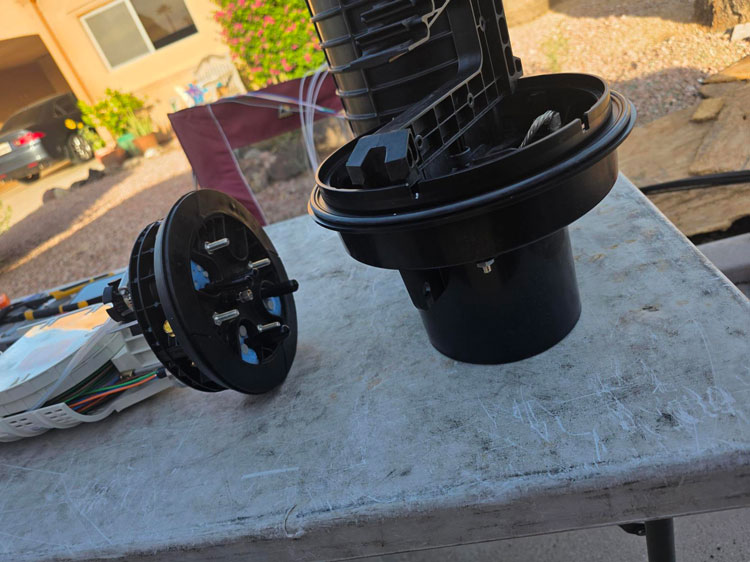
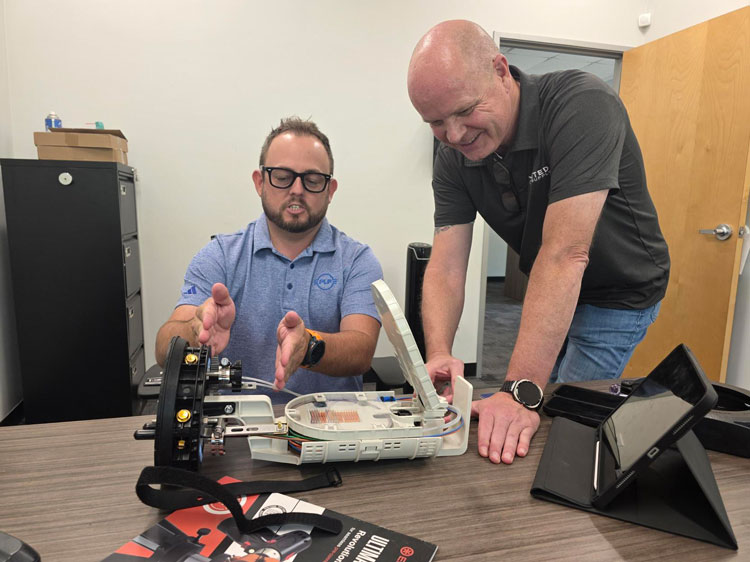
United Tel Supply’s Doyle Sheets recently spent time in Arizona with PLP’s Ryan Vansickle, meeting with customers and getting hands-on with PLP fiber solutions.
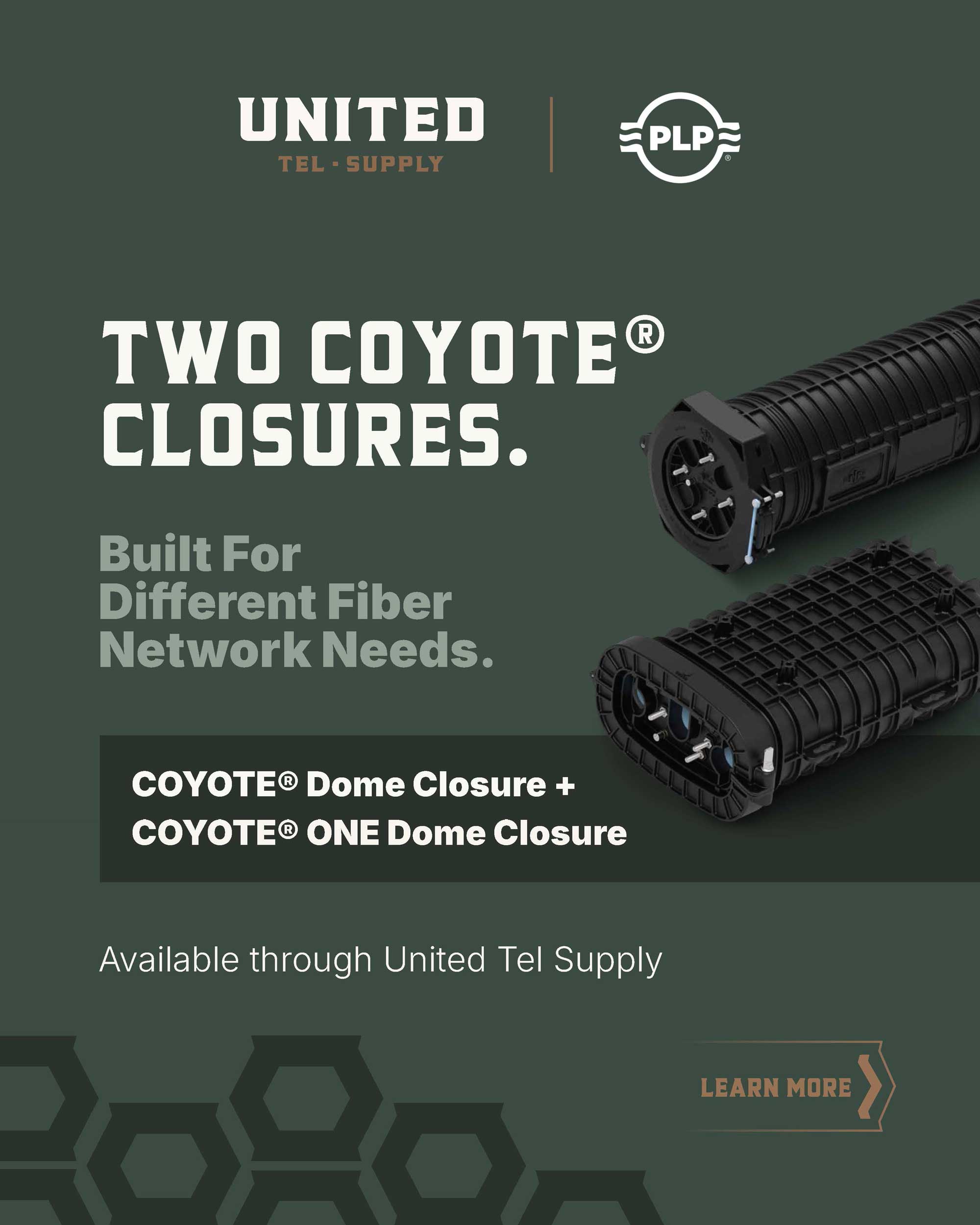
Two COYOTE® Closure Options for Different Fiber Network Needs
Choosing the right fiber closure comes down to the network you’re building, and PLP offers multiple options within the COYOTE® family to fit different applications.
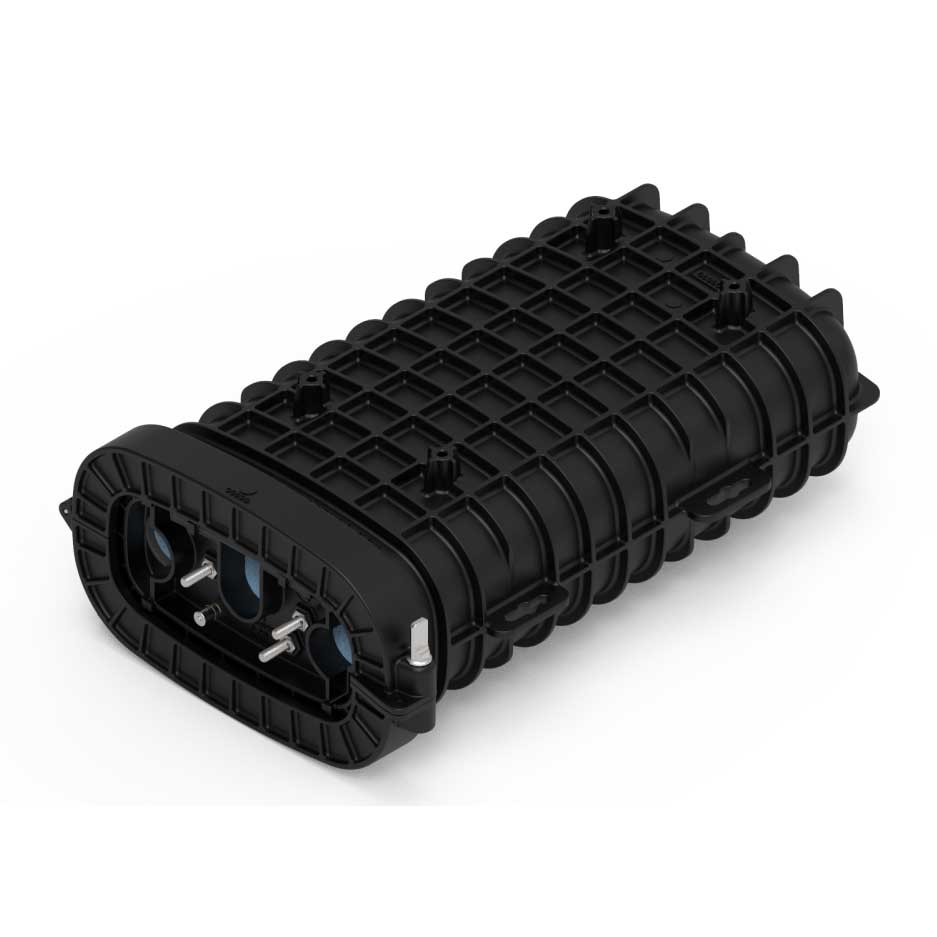
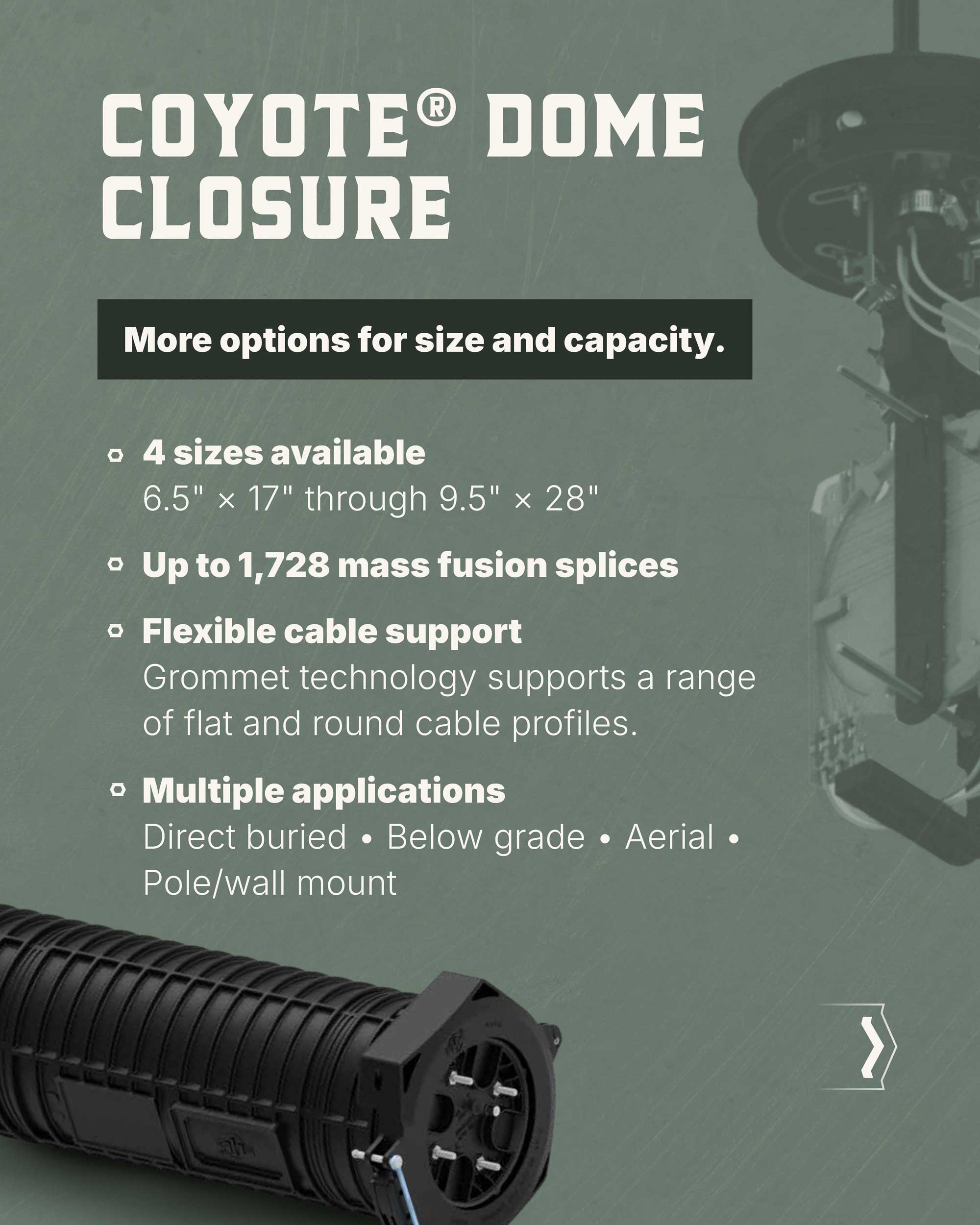
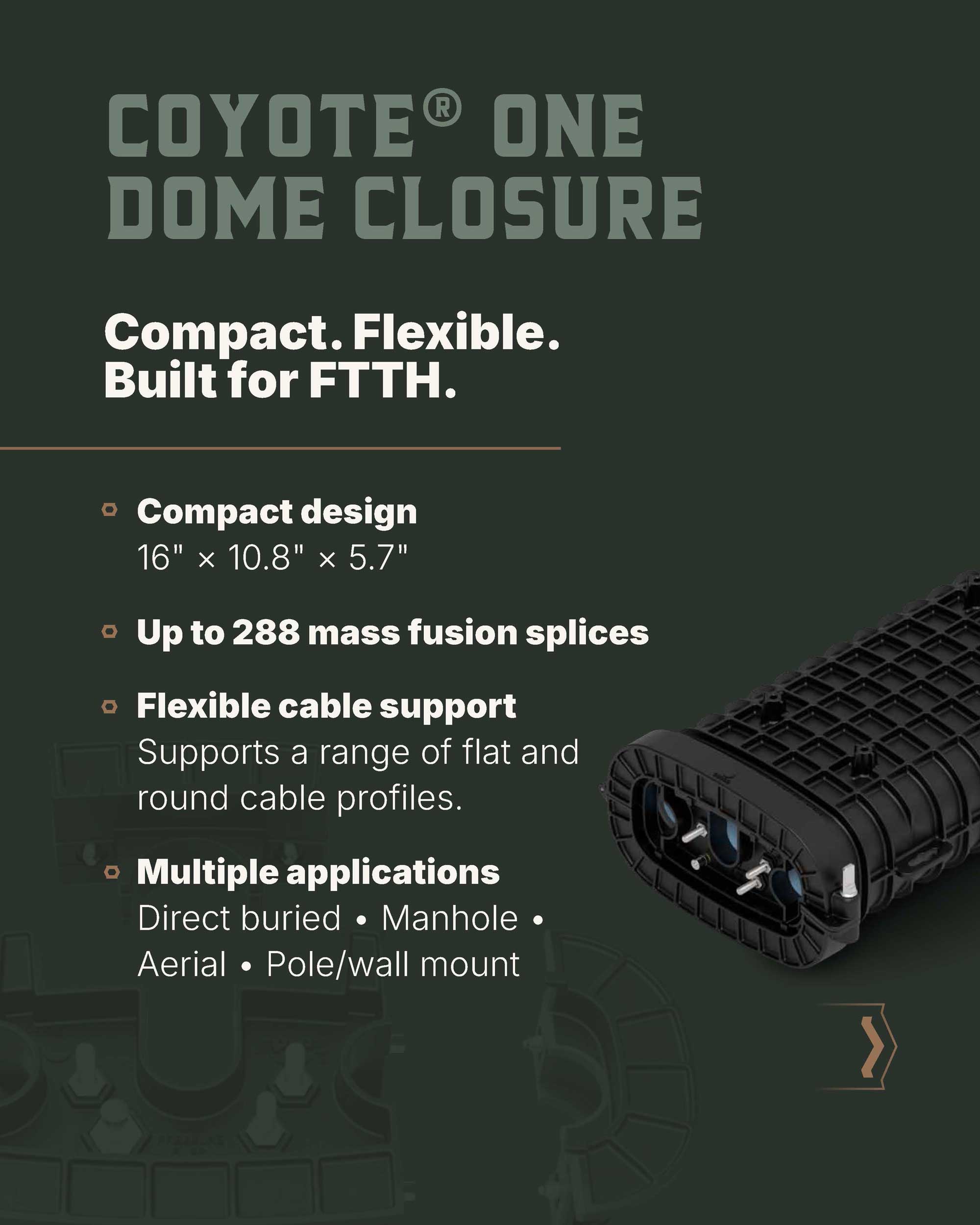
The COYOTE® Dome Closure offers a range of sizes and higher-capacity configurations, while the compact COYOTE® ONE Dome Closure is designed for FTTH and backhaul networks. Both feature flexible grommet sealing systems that support a range of flat and round cable profiles and can be used across direct buried, below-grade/manhole, aerial, and pole or wall mount applications.
The comparison takes a closer look at the two options and where each can fit into a fiber build.

PLP’s U.S. Manufacturing Supports Quality, Capacity and Broadband Supply
PLP was the first fiber optic splice closure manufacturer to self-certify for Build America, Buy America requirements, but domestic manufacturing isn’t something the company started because of BEAD.
It’s how PLP has been operating for years.
PLP manufactures products for the U.S. market here in the United States, with manufacturing operations in Arkansas, North Carolina, and Ohio supporting fiber connectivity, aerial hardware, pedestals, and other broadband infrastructure products.
That established U.S. manufacturing footprint gives PLP greater control over its production and quality while providing capacity to support broadband projects across the country. It can also help reduce some of the uncertainty that comes with relying heavily on overseas production and international shipping.
For United Tel-Supply, manufacturing capacity is only half of the equation. We work with customers to understand what they’re using, anticipate demand, and stock the PLP products they need so manufacturer lead time doesn’t automatically become customer lead time.
Sales rep Lacey Voth from United Tel-Supply shared a great example during a recent customer trip with PLP. One provider already knew and liked PLP products; their primary concern was availability. Once the team understood which products the customer needed consistently, the answer became much simpler: United Tel could bring those products into inventory.
That’s exactly the kind of problem we’re here to solve.
What Does Quality Really Look Like in Broadband Manufacturing?
PLP is the world’s largest producer of dead-ends, and every product they manufacture for the U.S. market is made here in the U.S.
In this conversation, Brendan O’Boyle from PLP and Peter Johnson from United Tel-Supply talk about PLP’s approach to quality, domestic manufacturing, and how having the right inventory in the right place helps broadband providers keep projects moving.
PLP Training Helps Broadband Technicians Get the Installation Right
PLP invests heavily in training because understanding why a product is installed a certain way can be just as important as knowing the installation steps. One example Brendan shared is flash testing a fiber optic splice closure. A technician can pressurize the closure and apply soapy water around the seals to identify a leak before putting it into service. It’s a relatively simple step, yet Brendan estimates only a small percentage of technicians regularly do it.
PLP sees similar knowledge gaps around bonding and grounding armored cable, properly lubricating O-rings and gaskets, cable preparation, and other installation details. These aren’t necessarily complicated practices, but skipping them can affect a network years after the initial build is complete.
That’s why PLP training isn’t just a product demo. It’s an opportunity to help technicians understand the engineering behind the product and the installation practices that help it perform as intended.
One of the best parts of United Tel-Supply’s relationship with PLP is that the technical expertise doesn’t stay at the factory.
PLP representatives regularly get into the field alongside the United Tel-Supply sales team to meet directly with customers and technicians. Products come with them, which gives customers a chance to get their hands on the equipment, compare it with what they’re currently using, and ask questions specific to their network.
Lacey recently traveled with PLP through her territory and saw firsthand how valuable those conversations can be. Some customers were already using PLP. Others had been committed to competing products for years. The objective wasn’t to tell every customer they needed to switch.
Instead, the conversations started with what the customer was already using, what was working, where they were running into challenges, and whether PLP had a solution that could improve the outcome.
That approach is important to both of us. PLP brings the engineering and product expertise. United Tel Supply brings our knowledge of the customer, their network, and what they’re trying to accomplish. When we put those together, we can have a much more useful conversation than simply asking what someone wants to order.
What should broadband providers be thinking about today if they want the networks they’re building to still be performing 20 or 30 years from now?
Brendan O’Boyle from PLP and Lacey from United Tel-Supply talk about technician education, hands-on training, and why making the right decisions during construction can have such a big impact on long-term network reliability.
PLP Aerial Network Solutions Build on Decades of Engineering Experience
PLP’s history in aerial infrastructure goes all the way back to the company’s beginning. Founded as Preformed Line Products in 1947, PLP developed the preformed helical technology behind the GUY-GRIP® dead-ends. Today, PLP is the world’s largest producer of dead-ends and continues to manufacture aerial solutions for broadband networks, including products for messenger strand and ADSS applications.
That experience is particularly relevant as broadband providers expand fiber into rural areas and environments where aerial construction makes the most sense. Aerial infrastructure has to withstand much more than the weight of the cable itself. Ice loading, wind, freeze-thaw cycles, wildlife, movement, and years of environmental stress all affect the plant. Small differences in how hardware is engineered and manufactured can become much bigger differences over the life of the network.
Peter Johnson sees this frequently with United Tel-Supply customers throughout the Northeast, where aerial construction makes up a significant portion of many networks. PLP’s ADSS capabilities, dead-ends, closure mounting solutions, slack storage, and other aerial products give those providers additional options when designing and maintaining their outside plant.
And because PLP has decades of experience engineering these products, customers aren’t simply buying hardware. They have access to the people who understand why it was designed that way and how it should perform in the field.
United Tel-Supply Helps Tier 3 Providers Get More From the PLP Partnership
PLP has the manufacturing capacity to support some of the largest broadband projects in the country, but Brendan made something clear in our conversations: Tier 3 providers have always been an important part of PLP’s business. That aligns closely with how we work at United Tel-Supply.
A smaller provider may not place the largest order, but that doesn’t make its network any less important to the people who depend on it. Those customers still deserve access to quality products, technical expertise, training, and inventory that helps them keep their projects moving.
PLP has traveled to small rural providers to conduct training because their technicians needed it. United Tel-Supply is willing to stock products around a customer’s needs, help solve an unusual application, or work through an order that might not get much attention somewhere else. Neither company is trying to win one transaction and move on.
We’re trying to help customers build better networks, solve problems when they come up, and be here for what comes next.
Explore PLP Broadband and Fiber Network Solutions
From COYOTE® fiber optic splice closures and pedestals to GUY-GRIP® dead-ends, FIBERLIGN® ADSS hardware, SLACKLOOP® cable storage, and other aerial network solutions, PLP offers a broad portfolio for building and maintaining reliable broadband networks.
United Tel Supply can help you identify the right PLP products for your application, coordinate training and technical support, and build an inventory strategy around what your network actually needs.
| Manufacturer - SKU | Description | Request quote |
|---|